
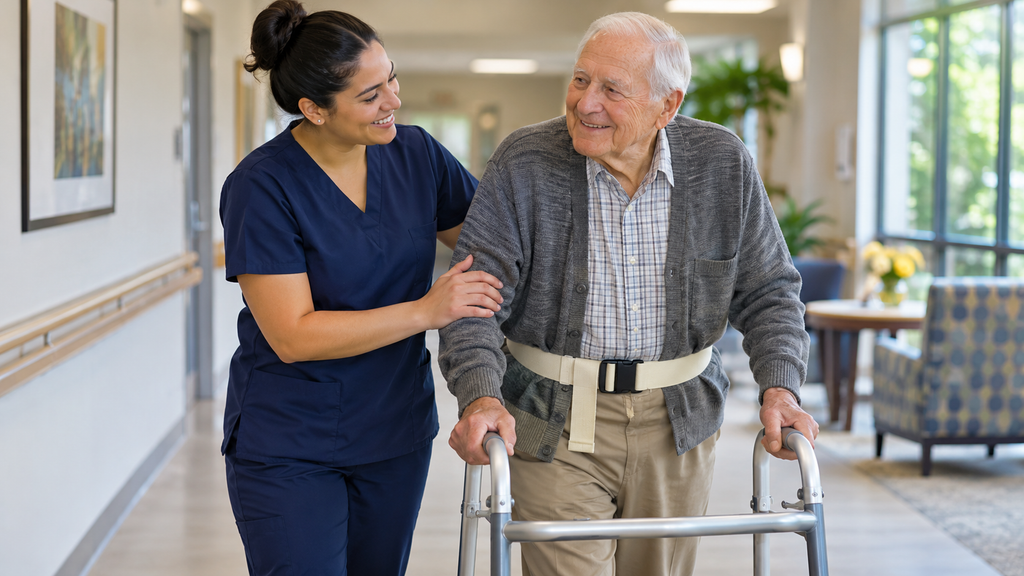
Falls, Mobility, Transfers & Injury Prevention
Helping Residents Move Safely, Maintain Independence, and Prevent Injuries
Every time you help a resident get out of bed, walk to the bathroom, transfer into a wheelchair, or move through the facility, you have an opportunity to protect their safety and independence.
Falls can lead to serious injuries, loss of confidence, reduced mobility, and major changes in a resident’s quality of life. As a Certified Nurse Assistant (CNA), you play an important role in recognizing fall risks, providing safe mobility assistance, and reporting changes before an injury occurs.
This four-hour continuing education course strengthens your ability to help residents move safely while respecting their dignity, choices, and individual care plans.
What You’ll Learn
Module 1: Understanding Fall Risks and Prevention
Learn how to recognize common fall hazards, identify changes that increase a resident’s risk of falling, and help create a safer care environment. Explore how mobility limitations, medications, environmental conditions, and changes in resident behavior may affect safety.
Module 2: Safe Mobility and Walking Assistance
Build confidence in assisting residents with walking, positioning, and everyday movement. Review safe body mechanics, gait belts, assistive devices, and the importance of following each resident’s individualized mobility plan.
Module 3: Transfers, Positioning, and Safe Resident Handling
Explore safe transfer principles, wheelchair safety, mechanical lift awareness, and teamwork during resident movement. Learn when additional assistance or equipment is needed and why attempting an unsafe transfer can put both residents and caregivers at risk.
Module 4: Injury Prevention, Fall Response, and Reporting
Learn how to recognize changes after a fall, respond appropriately within your CNA responsibilities, communicate observations to the nurse, and document events accurately. Explore how respectful care and timely reporting support resident safety.
Skills You’ll Strengthen
-
Recognizing fall hazards and changes in mobility.
-
Supporting safe walking and transfers.
-
Using mobility equipment according to training and the resident’s care plan.
-
Promoting independence without compromising safety.
-
Recognizing when additional assistance is needed.
-
Responding appropriately to falls and possible injuries.
-
Reporting and documenting resident changes clearly.
Learn Through Realistic CNA Situations
This course includes practical examples, interactive activities, clinical scenarios, knowledge checks, and a final examination to help you apply what you learn to everyday resident care.
Course Information
Designed for: California Certified Nurse Assistants and long-term care nursing assistants
Course length: 4 hours of continuing education
Format: Online, self-paced learning
Modules: 4
Assessment: Module knowledge checks and final examination
Why This Course Matters
Safe mobility is about more than preventing falls. It’s about helping residents remain active, confident, comfortable, and as independent as possible.
Your attention, communication, and safe care practices can make a meaningful difference in every resident’s day.